

















Borrow
Finance your GPU cluster
Fixed- or floating-rate, asset-backed financing underwritten on contracted cash flow and secured by the hardware.**
Borrow most of your deployment's cost
Finance up to 80% of the cost (loan-to-value), paired with your equity and offtake prepay.
Fixed or floating rates over 3–5 years
Your GPU-backed loan offers fixed or floating rates, a 3–5-year term and straight-line amortization.
A repeatable structure for every deal
The same core structure and standardized documents on every deal.
Refinance GPUs already in service
Deployed hardware qualifies too, so capital tied up in running clusters can fund the next build.
Impartial, systematic scoring dictates loan terms
Compute IQ scores the revenue the GPUs earn, not just the balance sheet, so a strong customer contract can carry the deal.
Track record
Experience running GPU deployments
Customer
Who buys the compute
Contract
Term, price and payment
- Loan size
- Interest rate
- Structure
One coordinated financing process
Select your stage to see what comes next.
Line up customer revenue
Secure a customer contract or document your on-demand revenue. Customer revenue repays the loan, so the review starts there.
Next step
Get a hardware purchase order
Five things every loan starts with
Customer contract or documented on-demand revenue
Secure a customer contract or document your on-demand revenue. Customer revenue repays the loan, so the review starts there.
Hardware purchase order or details of deployed GPUs
Get a purchase order from the OEM or authorized supplier for the cluster you plan to deploy. It determines the hardware, price and timeline the loan is sized against.
Colocation agreement and deployment plan
Sign a colocation agreement with a qualifying, insurable data center. The data center has to be one where the servers can be installed, powered and monitored.
Equity contribution of at least 20% of the deployment cost
Contribute at least 20% of the deployment cost as equity. The loan covers up to 80%, and the equity is confirmed before any loan capital is released.
Ownership and security interests that hold in the jurisdiction
A special-purpose vehicle is set up to hold the GPUs, the customer contract and the revenue accounts, and the loan is documented. Capital is committed at signing and held in escrow.
A defined structure from funding to repayment
Loans cover up to 80% of the deployment cost, offer fixed or floating rates and amortize monthly over 3–5 years. The GPUs, customer contracts and revenue accounts sit in a special-purpose vehicle under the operator's holding company, so the hardware secures the loan and stays in service.
- GPU hardware
- Customer contracts
- Revenue accounts
View your loans all in one central location
The USD.AI financing dashboard shows everything you own in one place. Coming soon
B300 [36]
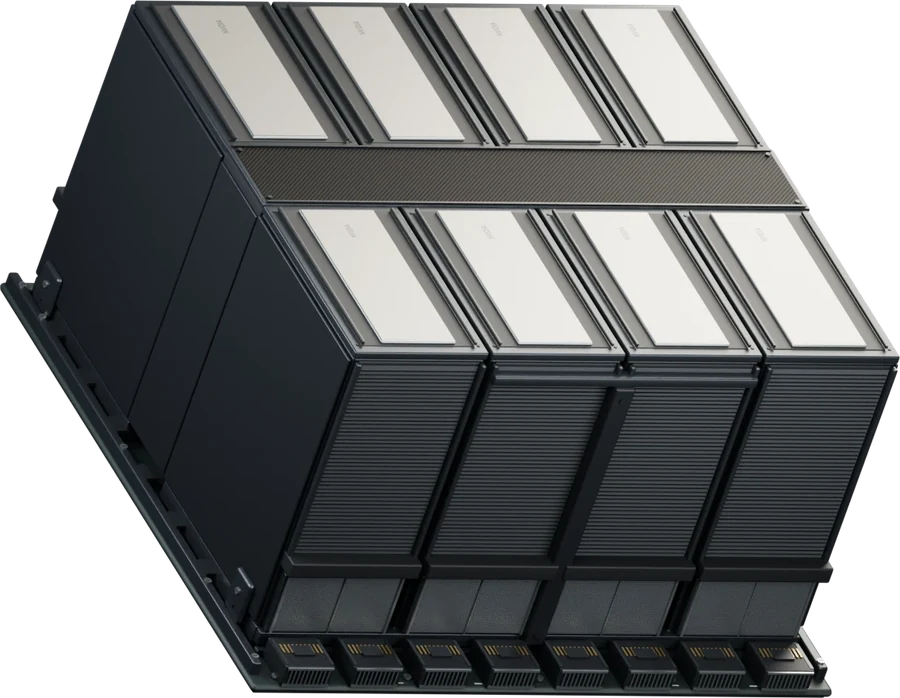
- NVIDIA HGX B30036
Hardware details
- Datacenter location
- Dallas, TX
- Offtake type
- Contract
- Collateral value
- $17,284,512.40
- Manufacturer
- Supermicro
- GPU type
- NVIDIA HGX B300
- Count
- 36 Servers
Loan details
- Origination date
- 25 July 2025
- Maturity
- 25 July 2028
- Term
- 3 Years
- APR
- [data]%
- Original principal
- $12,963,384.30
- Remaining principal
- $7,922,068.18
sUSDai attribution
- Interest paid out
- $1,735,052.96
- Principal repaid
- $5,041,316.12
- Current net APY
- —
Loan Schedule
Repayment Breakdown
13M
Size the loan before the first call
Estimate the maximum loan for a GPU deployment in three steps, then bring the figure to the origination team as a starting point for the conversation.
Up to 80% loan-to-value, with at least 20% equity.
Maximum loan**
Maximum loan $3,424,000
- Total collateral value
- $4,280,000
- Minimum equity
- $856,000
Common questions about GPU financing
Financing through USD.AI is for GPU cloud operators that own their hardware and rent it to customers, from operators financing a first deployment to established multi-site operators. The best fit has a defined deployment plan, financeable customer revenue, qualified hardware and data center, and the required equity. Collateral must be installed in a Tier III or Tier IV data center, in a jurisdiction with reliable title, security interests and enforcement.
Each GPU loan is priced on contracted cash flow, the operator's credit profile and the strength of the offtake contract. An offtake contract is the agreement under which a customer, the offtaker, buys the operator's compute. Documented on-demand revenue also qualifies, priced to reflect its shorter commitment. Fixed and floating rates are available over 3–5-year terms.
You contribute at least 20% of the deployment cost as equity, with the loan covering the remainder up to 80%. We confirm that equity before any capital leaves escrow. Part of it funds a debt-service reserve at closing: a cash buffer that covers loan payments if collections are delayed.
Every GPU loan is assessed programmatically against published underwriting standards. Compute IQ applies the same rubric to each deal, scoring the operator, the customer's credit and the strength of the offtake contract, so every operator is assessed on the same evidence. Programmatic, unbiased underwriting gets operators access to capital fairly. The score sets the loan size, pricing tier and structure, and a passing score isn't a financing commitment: origination checks the remaining conditions and gives final approval before the loan is signed. Once the loan is signed, capital is committed and held in escrow until the hardware is installed and verified.
You submit a hardware purchase order, details of the equity contribution and an executed colocation agreement, along with an executed offtake agreement or documented on-demand revenue. We also complete anti-money-laundering and know-your-customer (AML/KYC) checks on all ultimate beneficial owners, the people who ultimately own or control the company.
Yes. GPUs already in service qualify as well as new deployments, at up to 80% loan-to-value with fixed or floating rates. The GPUs keep running for their customers throughout, so refinancing frees capital tied up in a live cluster to fund the next build. Underwriting follows the same process as a new deployment, starting with the customer contract.